





Planning Election Signage: What Candidates Need to Consider Early
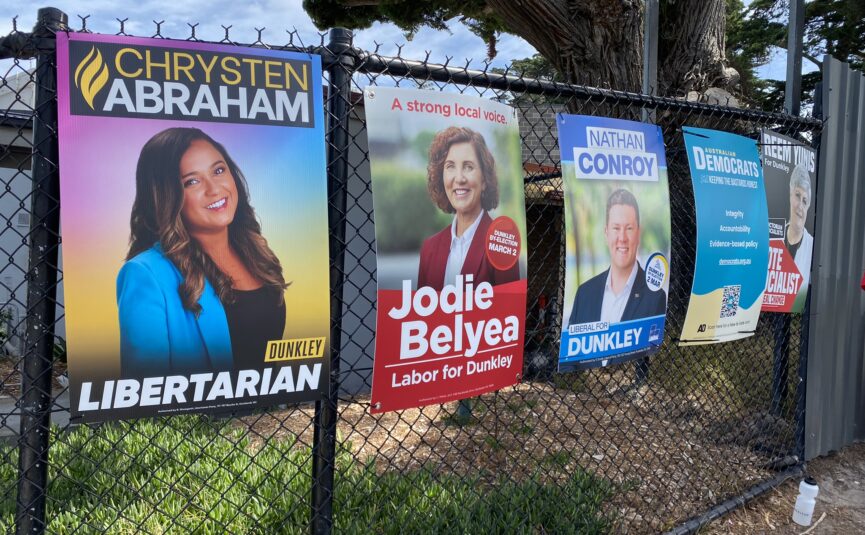
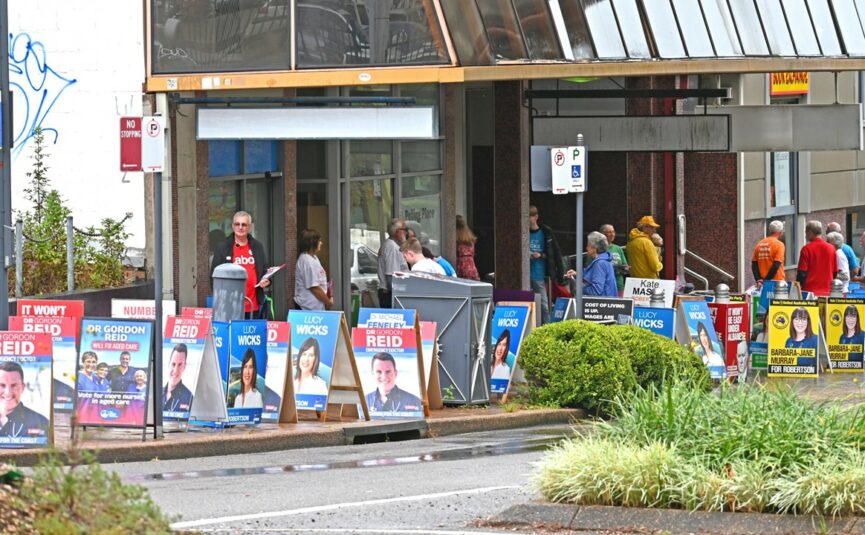
For political candidates and campaign teams, election signage is one of the most visible and recognisable parts of a campaign. From roadside placements to fences and community noticeboards, Corflute® election signs help build name recognition and reinforce messaging across an electorate.
However, one of the most common mistakes campaign managers make is leaving signage planning too late. Election periods create a surge in demand for Corflute® signs, which can lead to production bottlenecks, delivery delays, and rushed signs that are made without considering cost efficient signs and Corflute® recycling at end of the campaign.
With the Victorian election approaching in November (2026 Victorian state election will be held on 28 November 2026), now is the time for candidates and campaign managers to start thinking about their signage strategy. Early planning ensures you secure production support and capacity, finalise designs, and receive your signs with enough time to deploy them effectively across your electorate.
If you’re beginning to plan your signage, it’s worth reviewing the available options for Corflute® election signs and understanding the steps involved before placing an order.


Not all plastic fluted sheet is created equal.
Choose genuine Corflute® – Australian made and designed for a circular, cradle-to-cradle future.
Why Early Planning Matters for Election Signage
Election signage may seem straightforward, but it requires coordination across design, production and logistics.
Corflute® signs are typically ordered in large quantities, particularly for federal, state and local campaigns covering broad electorates. During election periods, multiple campaigns may be ordering signage at the same time, which can place pressure on manufacturing schedules.
Leaving signage planning too late can create several challenges:
- Production schedules filling up quickly during peak demand
- Limited availability of preferred sizes or materials
- Delays caused by late artwork approvals
- Freight timelines becoming tight as election day approaches
By factoring signage into your campaign timeline early, you reduce the risk of last-minute stress and give your team more flexibility when planning placements across your electorate.
Early preparation also allows time to review designs, choose the most sustainable materials, coordinate volunteers and organise installation so that your signage appears consistently and strategically throughout the campaign.
How Many Corflute® Election Signs Do You Actually Need?
One of the first questions campaign teams ask is: how many signs should we order?
Ranging between 50 to 2,000 generally, the answer will vary depending on several factors, including:
- The size of your electorate
- Your campaign visibility strategy
- The number of volunteers installing signage
- Your campaign budget
- The types of locations available for placement
Some campaigns focus on highly visible roadside locations, while others prioritise fence placements through community supporters. Others combine both strategies to maximise coverage.
Rather than focusing on a fixed number of signs, it’s often more helpful to consider where and how the signs will be used. Mapping out key roads, high-traffic intersections and supportive neighbourhoods can help guide quantity decisions.
If you are unsure about how many signs to order, speaking with an experienced supplier can help you estimate quantities based on your campaign scope and objectives.
Production Timelines and Lead Times to Factor In
Once you’ve decided on quantities and sizes, production timelines become the next important consideration.
One of the biggest delays in election signage production is late artwork finalisation. Changes to candidate photos, logos, colours or messaging close to the printing deadline can hold up production and push delivery dates back.
To avoid delays, campaigns should aim to:
- Finalise artwork as early as possible
- Confirm print-ready files before production begins
- Allow sufficient time for printing and finishing
- Factor in freight or delivery timelines
Production capacity can also vary significantly during election periods, particularly when multiple campaigns are ordering signage at the same time.
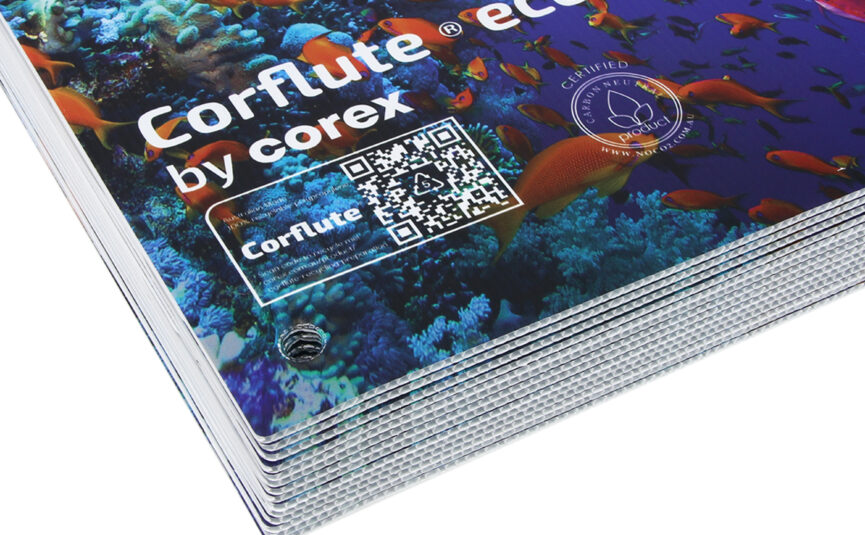
Working with an Australian manufacturer can help provide greater visibility over production schedules and reduce the risk of extended shipping timelines. Local production also ensures material quality and sustainable options like recycled Corflute® eco (made from 100% recycled content), which is important when producing signage in large volumes.
Tips for Election Sign Designs, Sizes and Messages
Election signs are often viewed quickly by passing motorists or pedestrians, which means clarity and simplicity are essential. An effective corflute election sign should communicate the most important information instantly.
Some practical design tips include:
Keep the message simple
Most election signs feature the candidate’s name, party affiliation (if applicable) and a clear visual identity. Avoid overcrowding the design with too much information.
Use strong contrast
High contrast colours make signs easier to read from a distance. Bold colours and clean layouts help the text stand out.
Choose clear, legible fonts
Simple fonts are easier to read quickly, particularly from moving vehicles. Avoid overly decorative or thin typefaces.
Use a recognisable photo
If including a candidate photo, choose a clear, well-lit image that maintains consistency across other campaign materials.
Maintain brand consistency
Your signage should align with your broader campaign identity, including colours, logos and messaging used in other materials.
Include recycling information
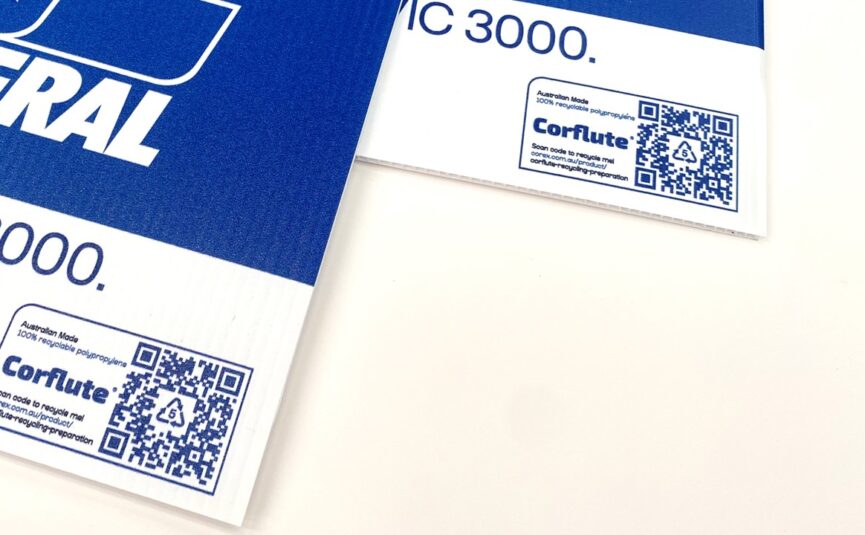
Make sure you include a QR code or “how to recycle” information to ensure it has the best chance of recycling and reuse post-election.
Good design not only improves readability but also reinforces professionalism and credibility throughout the campaign.
Corflute® election sign sizes
The most common Corflute® election sign size is 600 mm x 900 mm in both portrait and landscape orientations, but Corflute® election signs can be made to any size that fits on a standard Corflute® sheet size of 2440 mm by 1220 mm.
Remember to Check Compliance with Local Council and Electoral Rules
Before placing election signage throughout an electorate, it’s important to understand the relevant rules and regulations.
Local councils and electoral authorities may have guidelines regarding:
- Where signs can be placed
- The size of election signage
- When signs can be installed
- How long they can remain after election day
These requirements can vary between regions, so campaigns should review local regulations carefully before deploying signage.
Checking these rules early can prevent issues such as sign removal, fines or compliance concerns during the campaign.
While suppliers can provide guidance on typical sign sizes and formats, candidates should always confirm placement requirements with the relevant authorities.
Getting Election Signage Ready Before November
With election campaigns building momentum in the lead-up to November, signage planning should ideally begin weeks or even months in advance.
Starting early allows campaigns to:
- Confirm signage quantities
- Finalise artwork and messaging
- Secure production slots
- Organise distribution and installation
Early planning also provides flexibility if additional signage is required during the campaign.
If you are beginning to prepare your election materials, now is the ideal time to review your signage needs and speak with a supplier about production timelines.
You can explore available options for Corflute® election signage here:
https://corex.com.au/product/corflute-election-signs/
What Happens to Election Signs After the Campaign?
Election signage plays an important role during a campaign, but it’s equally important to consider what happens once the election is over.
Corflute is made from polypropylene, which means it can be recycled and reprocessed into new plastic products. However, not all signs marketed as “corflute” are the same. You can read more about What is Corflute® here.
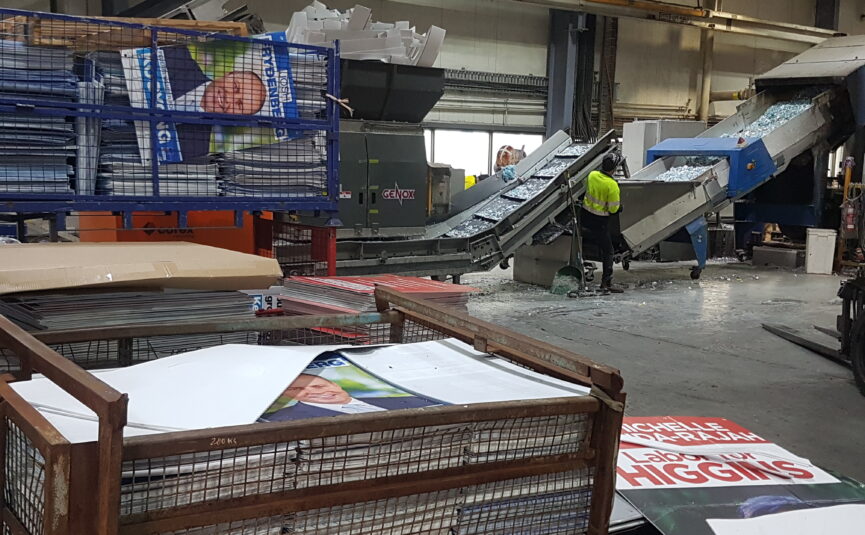
To ensure election signs can be responsibly recycled and remanufactured at the end of the campaign by Corex Recycling, they must be produced from genuine polypropylene Corflute®. In Australia, genuine Corflute® sheet is manufactured by Corex using recyclable polypropylene.
Some imported plastic signage contains contaminants or mixed materials that may not be accepted by recycling programs, making end-of-life recovery far more difficult.
For campaigns that want to minimise waste and support responsible material recovery, it’s important to confirm that signage is printed on genuine Australian-made Corflute® sheets. This ensures the material can be collected, recycled and returned into the circular economy after the election.
Planning for both installation and recovery of signage help campaigns manage materials more responsibly and reduces the environmental impact of large-scale signage programs.
Why Choose Corex for Corflute® Election Signs
For election campaigns, consistency and reliability are essential. When ordering signage in large volumes, campaigns need confidence that materials will perform well and remain durable throughout the campaign period.
Corex manufactures Corflute® products locally in Victoria, providing campaigns with a dependable source of high-quality recyclable polypropylene signage materials. Corex is also the exclusive manufacturer of Corflute® eco, an excellent choice for people seeking the most sustainable material for their election signs. Corflute® eco is made using post-consumer and post-industrial waste.
Some advantages of working with a specialist manufacturer include:
- Consistent material quality across large production runs
- Reliable production timelines during peak demand periods
- Local manufacturing and supply chain reliability
- Experience supporting both small campaigns and large-scale elections
- Corflute® recycling at end of life
Corex works with a wide range of customers, from local council candidates through to major campaign teams ordering signage in bulk.
If you’re planning for an upcoming election, you can explore the available signage options or speak with the team about your campaign requirements.
Learn more about Corflute® election signs here:
https://corex.com.au/product/corflute-election-signs/
Or contact the team to discuss your project:
https://corex.com.au/contact/
What is Corflute?
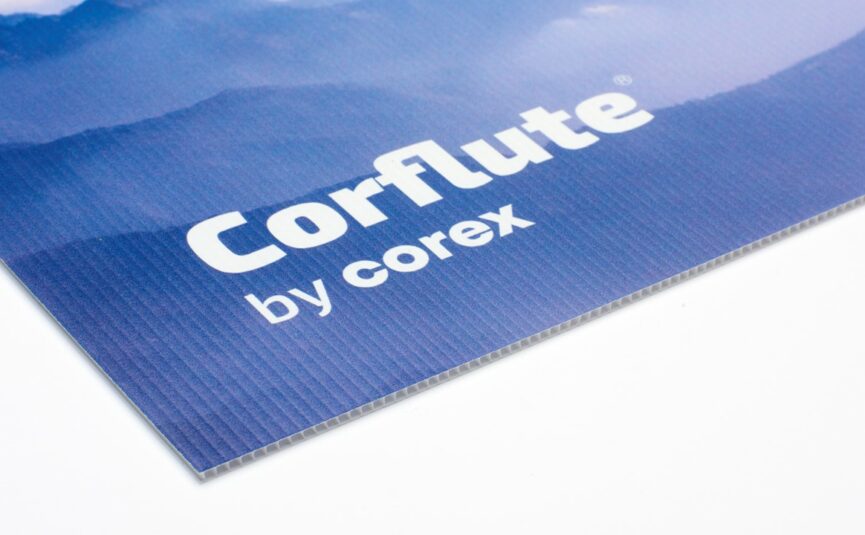
Corflute® is an Australian made plastic sheet with endless uses. Corflute® is a proprietary product manufactured by Corex Australia. Corflute is a twin wall profile polypropylene (PP) sheet defined by a series of flutes.
Corflute® is reusable, lightweight, versatile, printable, durable, waterproof and recyclable through our own closed-loop recycling facility.
About Corex
Corex is a unique Australian closed loop business with Corflute and Promeg polypropylene sheet extrusion, fabrication, and recycling all on one site.
Corex together with Megara, have created a specialist range of products and services including polymer engineering, industrial design, printing, and fabrication so that we can offer a one-stop-shop to bulk handling manufacturers and producers.
Everything that we make is made to order so that can produce things to your exact specifications.
More related articles:
- What is Promeg® plastic and when should you use it? – https://corex.com.au/promeg-plastic-explained/
- Why Corflute® is a more sustainable alternative in circular applications – https://corex.com.au/why-promeg-and-corflute-are-the-sustainable-alternative-to-cardboard-in-circular-packaging/
- Looking for cost-effective Corflute® sheet options? – https://corex.com.au/surplus-corflute-sheets-cost-effective-sustainable-stock-available-now/
- Explore Corflute® election signs – https://corex.com.au/product/corflute-election-signs/
FAQ's
When should candidates order their election corflute signs?
Ideally candidates should begin planning and ordering election signage several weeks or months before the election campaign begins. Early planning allows time to finalise artwork, confirm quantities and secure production slots before demand increases. Ordering early also ensures your campaign receives signage in time to strategically place signs across the electorate before early voting and peak campaign activity.
Are corflute election signs recyclable?
Yes. Corflute signs are made from polypropylene plastic, which can be recycled and reprocessed into new plastic products. However, to ensure signs can be responsibly recycled at the end of a campaign, it’s important that they are printed on genuine polypropylene corflute material. Using Australian-made Corflute® sheet manufactured by Corex helps ensure the material can be collected and recycled after the election. If you are not purchasing your signs from Corex, ask your printer, “Are you printing my signs on genuine Corflute®?” If the answer is yes, you can recycle your signs at Corex Recycling. Complete the form here https://corex.com.au/service/plastic-recycling/#customer-booking
Sign up for industry innovations, special offers and useful information.
"(Required)" indicates required fields