





Do You Need Both Low-Level and High-Level Roof Ventilation? Understanding Passive Roof Airflow
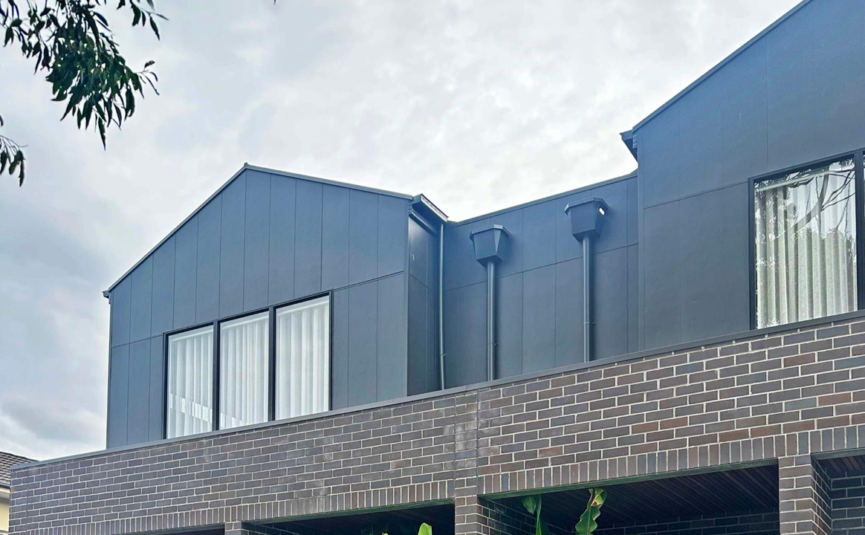
If you’re planning a roof build or reviewing ventilation requirements, one question comes up regularly:
Do you always need both low-level and high-level roof ventilation products?
The short answer is: not always, but in many residential roof systems, passive roof ventilation performs best when air can both enter and exit the roof cavity effectively.
For the Cor-Vent® 15°–75° roof pitch range, covering many Australian residential roofs around 23–24 degrees, the goal is less about using every ventilation product available and more about creating a complete airflow pathway.


What is passive airflow?
Passive airflow is natural air movement that happens without fans or mechanical systems.
When talking about a house roof, it’s like your house breathing. Cooler air enters low in the roof space, warmer air rises and escapes higher up, helping to reduce heat and moisture (condensation) build-up naturally.
A balanced system generally follows a simple principle:
Air enters low. Air exits high.
Low-level ventilation products create intake points, allowing cooler external air to enter the roof space.
High-level ventilation creates exhaust points, helping warmer air and moisture move out of the roof cavity.
Together, this airflow pathway can assist with managing moisture and condensation risk while improving roof space ventilation performance.
Typical Residential Roof Build (15°–75° Roof Pitch)
For many residential roofs around 23–24 degrees:
✓ Low-level intake ventilation
✓ High-level exhaust ventilation
✓ Continuous airflow pathway through the roof cavity
This combination generally creates stronger passive airflow outcomes than low-level ventilation alone.
A common misconception is:
“I’ve installed low-level ventilation, so my roof is fully ventilated.”
Low-level ventilation is often the entry point. Effective airflow improves when air has a pathway to move through and exit the roof space.
Standard Roof Pitch Strategy (15°–75°)
For typical residential roof pitches, ventilation design often follows:
Low → High Airflow Pathway
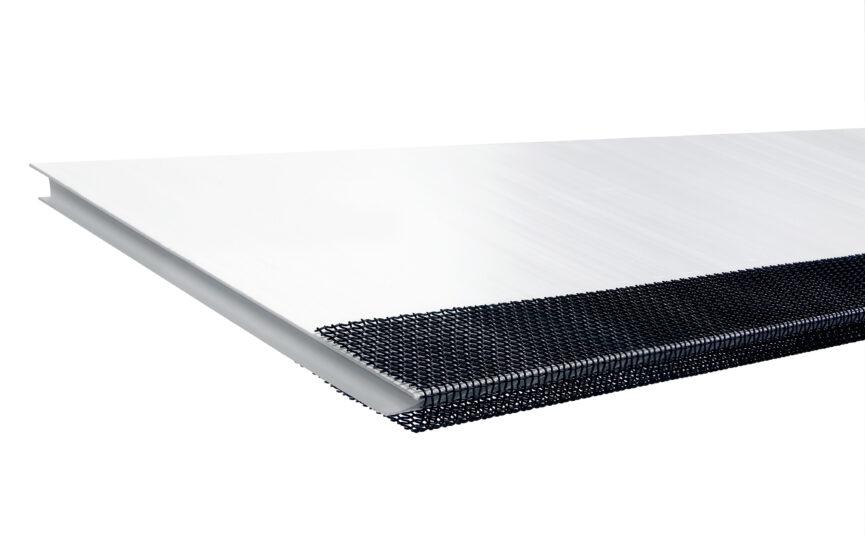
- Cor-Vent® 8K and 25K low-level intake ventilation
- Cor-Vent® 5K high-level ventilation
- Natural airflow movement through the roof cavity
This intake-to-exhaust strategy supports passive roof ventilation performance.
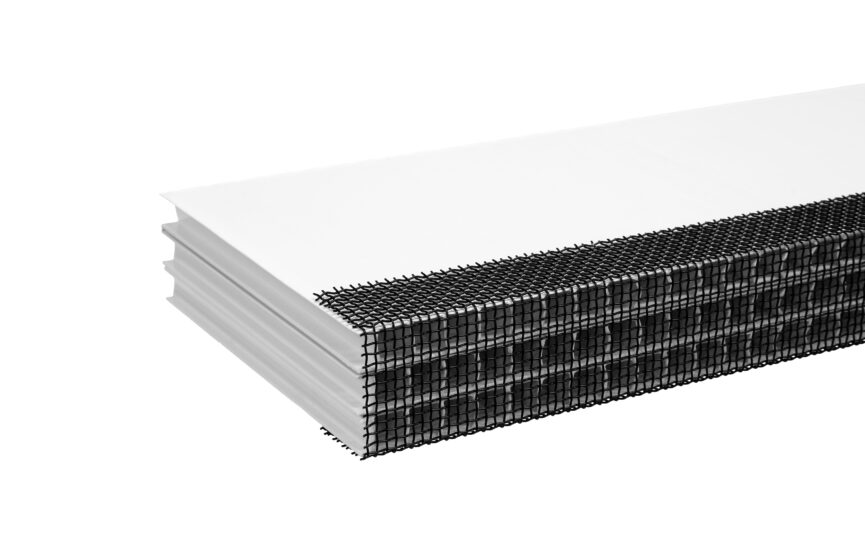
High Roof Pitch Strategy (0°–15°)
What About Low Roof Pitches (0°–15°)?
Low-pitch roof systems require additional consideration.
As roof pitch decreases, natural airflow potential can reduce, increasing sensitivity to moisture management and condensation control.
Low-pitch applications often require careful product selection and ventilation planning rather than simply applying a standard residential approach.
Simple Rule of Thumb
Air in low. Air out high.
Passive roof ventilation performs best when intake and exhaust ventilation are considered together.
Importantly, Cor-Vent® 5K high-level ventilation is not automatically mandatory every time a low-level ventilation product is used.
Roof ventilation requirements depend on roof design, pitch and system specification.
However, for many residential roof applications between 15° and 75°, combining low-level intake with high-level exhaust aligns with the intended passive ventilation philosophy.
Installation & more support
Cor-Vent® product installations do not require any special tools, training, or major changes to the roof build. Cor-Vent® Installation Guides are included in the Product Information Download Forms on this page.
Certification
Cor-Vent® meets the DTS airflow opening requirements per NC2022, including BAL Zones.
For more support, contact our Cor-Vent® specialists for additional information building@corex.com.au
Sign up for industry innovations, special offers and useful information.
"(Required)" indicates required fields